Salary in Employment Relationships – Rules on Determination, Payment, and Payroll Deductions
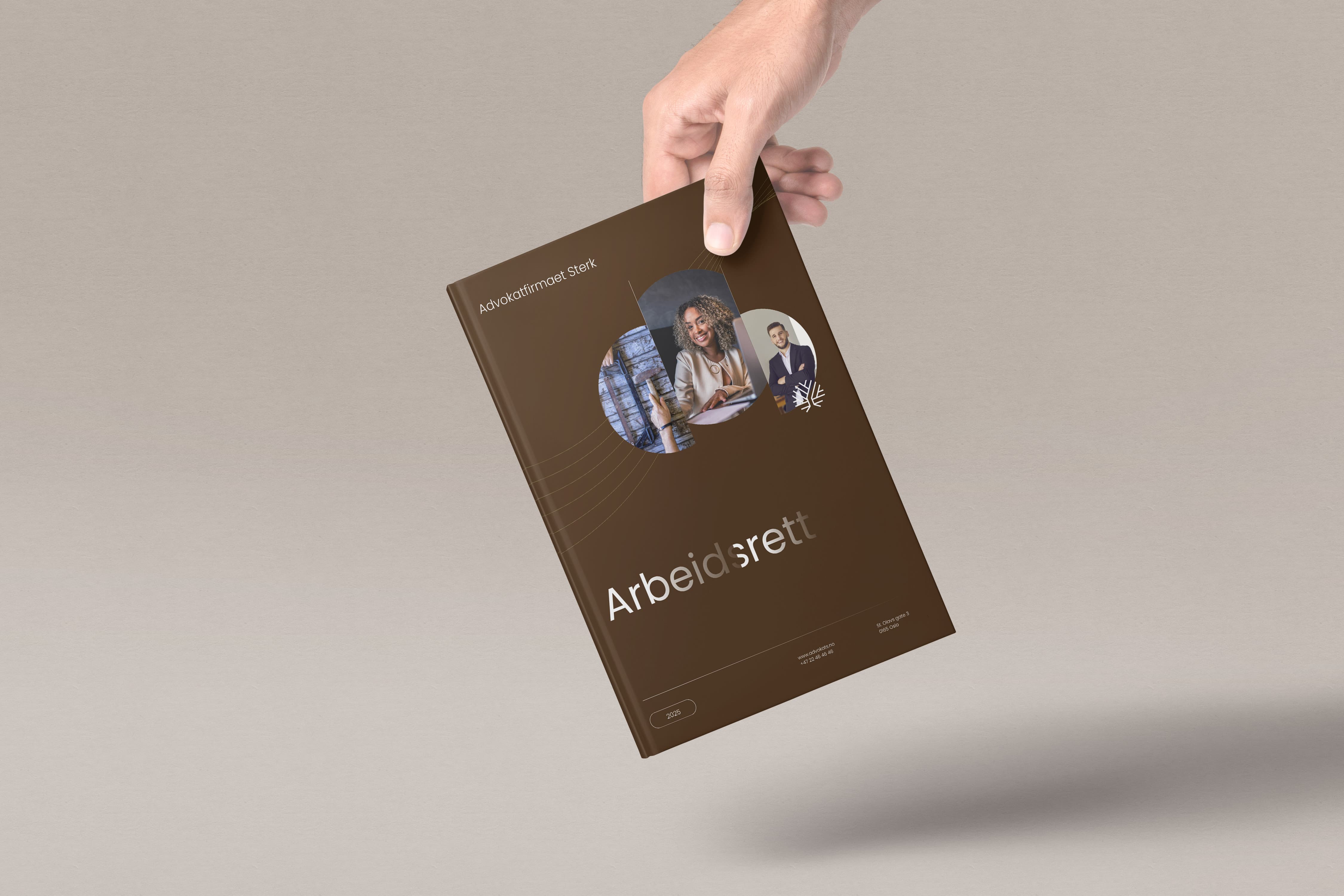
Salary in Employment Relationships: Rights, Regulations, and Restrictions

The central obligation of the employee is to make their labor available, while the employer's main obligation is to pay compensation (salary) for this labor. This chapter provides an overview of the main rules related to salary in employment relationships, from determination and various salary systems to payment, salary deductions, and the statute of limitations on salary claims.

Basic Principles for Salary

Although the concept of salary is not uniformly defined in Norwegian law, the Working Environment Act contains several provisions that regulate salary-related issues. The employment contract must include information about agreed salary, any supplements, payment method, and timing for salary payment, cf. Working Environment Act § 14-6 (1) letter i.

The starting point in Norwegian law is that:

  • The employee has a right to salary when labor is made available

  • An employee who is absent from work is, in principle, not entitled to salary

  • The employer bears the operational risk for conditions that prevent the employee from performing work when labor is available

The law provides exceptions to these principles in several cases, including sickness, where the employer must pay salary during the employer's period (up to 16 days), cf. National Insurance Act § 8-19 (1).

Different Salary Systems

There are mainly two types of salary systems:

  1. Time-based salary: The salary is determined based on the time the employee makes their labor available (hourly, daily, weekly, monthly, or yearly salary). The remuneration is independent of the work result.

  2. Performance-/results-based salary: The salary is based on the work results, as with:

    • Piecework salary

    • Commission salary

    • Bonus schemes

Often, combination schemes are agreed upon, for example, a fixed minimum salary with results-based supplements. The parties are fundamentally free to agree on which salary system shall apply, but the system must be designed so that the employee is not subjected to physical or mental strain, cf. Working Environment Act § 4-1 (2).

Determination of Salary

Salary terms are fundamentally a private legal relationship between employee and employer and are regulated through:

  • Individual employment contract

  • Collective agreements

The legislation, however, imposes several limitations on contractual freedom:

  1. Generalization of collective agreements: In certain industries, the Tariff Board has established non-negotiable "minimum conditions" for salary.

  2. Prohibition against discrimination: The Working Environment Act and the Equality and Anti-Discrimination Act prohibit discrimination in the determination of salary.

  3. Overtime payment: Employees who work overtime are entitled to a supplement of at least 40 percent to the regular salary.

  4. Holiday payment: For work on May 1st and 17th, the employee is entitled to a supplement of at least 50 percent to the regular salary, unless otherwise agreed.

Payment of Salary

Timing of Payment

The parties are fundamentally free to agree on when the salary should be paid. Without an agreement, salary payment must occur at least twice a month, cf. Working Environment Act § 14-15 (1).

Method of Payment

The salary cannot be paid in cash, cf. Working Environment Act § 14-15 (2). Payment should occur via bank or institution authorized to conduct payment processing. The purpose is to ensure traceability and reduce the scope for tax evasion and other violations.

Exceptions to the prohibition against cash settlement only apply when payment via bank is "impossible", "very burdensome", or will be "very burdensome" for the employer and employee to settle in this manner.

Salary Deductions and Holiday Pay

The main rule in Working Environment Act § 14-15 (2) is that there is a prohibition against salary and holiday pay deductions. This is an exception to the principle of enforced set-off, and the purpose is to ensure that the employee receives salary paid as fully as possible and that the salary is predictable.

The prohibition against deductions applies to compensation that the employee is entitled to as part of their salary, but not other compensations like reimbursement of travel expenses.

Exceptions to the Deduction Prohibition

Working Environment Act § 14-15 (2) letters a-f sets out an exhaustive list of cases in which deductions in salary and holiday pay can still be made:

a) Legally mandated deduction: For example, advance deduction for tax.

b) Employee contribution to occupational pension scheme: Deduction for the employee's contribution to mandatory occupational pension schemes.

c) Written agreement: Deduction agreed upon in advance in writing. The Supreme Court has in HR-2021-2532-A (Eltel) clarified that the agreement must specify the actual salary deduction so that the employee retains predictability for their salary payments.

d) Collective agreement: Deduction for union dues, collective insurance, educational and development fund, or low wage fund when this is specified in the collective agreement.

e) Liability for damages to the employer: Deductions can be made when:

  • Damage is caused to the business in connection with work

  • The employee has acted intentionally or with gross negligence

  • The employee acknowledges responsibility in writing, the responsibility is established by judgment, or the employee unlawfully resigns from their position

f) Work stoppages or lockouts: Deduction due to absence caused by strike or lockout.

For deductions according to letters c, e, and f, a crucial limitation applies: The deduction must not encompass the part of the salary that the employee reasonably needs to support themselves and their family.

Statute of Limitations on Salary Claims

Claims for salary expire according to the Limitation Act, with a general limitation period of three years. The period is counted from the day the salary claim becomes due. In HR-2019-1914-A (Relief Worker III), the Supreme Court clarified that for salary claims not related to collective disputes, the Limitation Act's rules apply fully.

State Salary Guarantee in Bankruptcy

The salary guarantee scheme covers, subject to certain conditions and within certain limits, outstanding claims for salary and holiday pay in the event of employer insolvency, cf. Wage Guarantee Act § 1. The guarantee is limited to salary claims with priority in the bankruptcy estate, and for each employee, a limit of twice the basic amount of the national insurance (2G) applies.

Summary

The salary rules in Norwegian labor law balance the regard for contractual freedom with the need for worker protection. Although the parties are fundamentally free to agree on salary and salary systems, the legislation sets clear boundaries for how the salary should be paid and when deductions can be made. The prohibition against salary deductions, which ensures predictability for the employee, and the exhaustive list of exceptions where deductions can still be made, are particularly important.

Sterk Law Firm

Your Partner for a Well-Functioning Workplace

Your Partner for a Well-Functioning Workplace

Your Partner for a Well-Functioning Workplace

Employment law challenges can be complex and time-consuming, whether you are a business leader or an employee. The consequences of incorrect handling can be significant, both in human and economic terms. Our lawyers have extensive experience from various aspects of working life and broad expertise in all areas of employment law. We can therefore offer precise advice and support throughout the process, allowing you to focus on your core business.

Employment law challenges can be complex and time-consuming, whether you are a business leader or an employee. The consequences of incorrect handling can be significant, both in human and economic terms. Our lawyers have extensive experience from various aspects of working life and broad expertise in all areas of employment law. We can therefore offer precise advice and support throughout the process, allowing you to focus on your core business.

Advokatfirmaet Sterk

Comprehensive Employment Law Assistance

Explore

More articles

Sluttpakker - rettslige rammer og praksis

Employment Law

Oct 13, 2026

Permittering eller oppsigelse – hva er forskjellen?

Permittering setter arbeidsplikten midlertidig på pause, mens oppsigelse avslutter arbeidsforholdet etter oppsigelsestiden. Om arbeidsmangelen er forbigående eller varig, er sentralt for hvilket tiltak arbeidsgiver kan bruke. Forskjellen har betydning for både lønn, fremgangsmåte og muligheten til å komme tilbake i arbeid.

Sluttpakker - rettslige rammer og praksis

Employment Law

Oct 13, 2026

Lønn og dagpenger under permittering – hva har du rett på?

Ved permittering får du normalt lønn i varslingsperioden og i en arbeidsgiverperiode etter oppstart. Deretter kan du ha rett til dagpenger, men NAV vurderer vilkårene særskilt. Inntekten din avhenger blant annet av tidligere inntekt, permitteringsgrad og hvor mye du arbeider.

Omplassering og endringsoppsigelse - rettslige rammer

Employment Law

Sep 16, 2025

Delvis permittering – hva betyr det for arbeidstid og lønn?

Ved delvis permittering arbeider du en del av din vanlige arbeidstid og er permittert resten. Arbeidsgiver betaler lønn for arbeidet og normalt permitteringslønn i starten. Deretter kan dagpenger dekke deler av inntektstapet, dersom arbeidstiden er tilstrekkelig redusert og øvrige vilkår er oppfylt.

Interesseavveining ved oppsigelse - rettslige rammer

Employment Law

Sep 16, 2025

Hvor lenge kan du være permittert?

Arbeidsgiver kan som hovedregel være fritatt fra lønnsplikten under permittering i 26 uker innenfor 18 måneder. Dette er ikke en absolutt grense for permitteringens varighet. Hvor lenge permitteringen kan fortsette, avhenger også av grunnlaget, tariffreglene og om arbeidsgiver må begynne å betale lønn igjen.

Contact us

Contact Sterk Law Firm for legal assistance and advice. Our dedicated team of experienced lawyers is ready to find tailored solutions for your specific challenges.

Portrait of a man in a suit with arms crossed, in front of a graphic background – expressing professionalism and confidence

By submitting this form, you agree to our privacy policy and terms of service.

Explore

Explore how Sterk Law Firm can address your legal needs and assist you in achieving your goals.